
Cloud ERP for Small Business
Introduction
Running a small business in the USA is not easy. Business owners manage inventory, employee records, customer service, accounting, sales, and many other daily tasks at the same time. As a business grows, handling everything manually becomes stressful and time-consuming. Many companies start facing delays, errors, and communication problems because their systems are not connected properly. This is where Cloud ERP for small business becomes very useful.
Cloud ERP systems help businesses organize their work in one place. Instead of using separate software for accounting, inventory, and customer management, companies can use one connected platform. This saves time, reduces mistakes, and improves productivity. Small businesses also like cloud ERP because it can be used from anywhere with internet access.
Today, many small companies in the USA are moving toward cloud solutions because they are affordable and simple to manage. Whether you own a retail shop, online business, manufacturing company, or service agency, cloud ERP can help improve daily operations. In this guide, you will learn how cloud ERP works, its benefits, costs, features, and how to choose the right solution for your business.
What Is Cloud ERP?
Cloud ERP for small business is software that helps companies manage important business activities using an online system. ERP stands for Enterprise Resource Planning. It connects different business departments into one platform.
Instead of installing software on office computers, cloud ERP works through the internet. Employees can log in from different devices and access business information securely.
Main Functions of Cloud ERP
| Feature | Purpose |
|---|---|
| Accounting | Tracks income and expenses |
| Inventory Management | Monitors products and stock |
| Payroll | Manages employee payments |
| Sales Tracking | Records customer orders |
| Reporting | Creates business reports |
| Customer Management | Stores customer information |
Cloud ERP helps businesses work faster and make better decisions using real-time data.
Why Small Businesses Need Cloud ERP
Many small businesses still use spreadsheets or disconnected software. This often creates confusion because information is stored in different places.
Using Cloud ERP for small business helps companies solve these problems by connecting all operations into one system.
Benefits for Small Businesses
- Better organization
- Faster reporting
- Fewer manual errors
- Improved teamwork
- Easier inventory tracking
- Faster customer service
- Secure online access
Small businesses can also grow more smoothly because cloud ERP systems can handle increasing workloads.
Define ERP Software in Simple Words
Many people ask experts to define ERP software in an easy way. ERP software is a business management system that combines multiple tasks into one platform.
For example, instead of using separate tools for accounting, inventory, and payroll, ERP software connects everything together. This helps business owners save time and improve efficiency.
ERP systems are useful for:
- Retail businesses
- Online stores
- Manufacturing companies
- Service providers
- Construction companies
- Healthcare businesses
Modern ERP systems are easier to use than older systems, especially for small businesses.
How Cloud Based ERP Software Works
Cloud based ERP software operates through online servers instead of office computers. Businesses usually pay monthly or yearly subscription fees to access the software.
Employees can log in using:
- Desktop computers
- Laptops
- Tablets
- Smartphones
Since the software is cloud-based, updates and maintenance are handled by the provider.
Advantages of Cloud Technology
| Advantage | Description |
|---|---|
| Remote Access | Work from anywhere |
| Automatic Updates | No manual software installation |
| Lower Hardware Costs | No expensive servers needed |
| Better Security | Data protection systems included |
| Easy Scaling | Add users as the business grows |
This flexibility makes cloud ERP popular among small businesses in the USA.
Also Check – Business Liability Insurance : Best Quotes For Owners
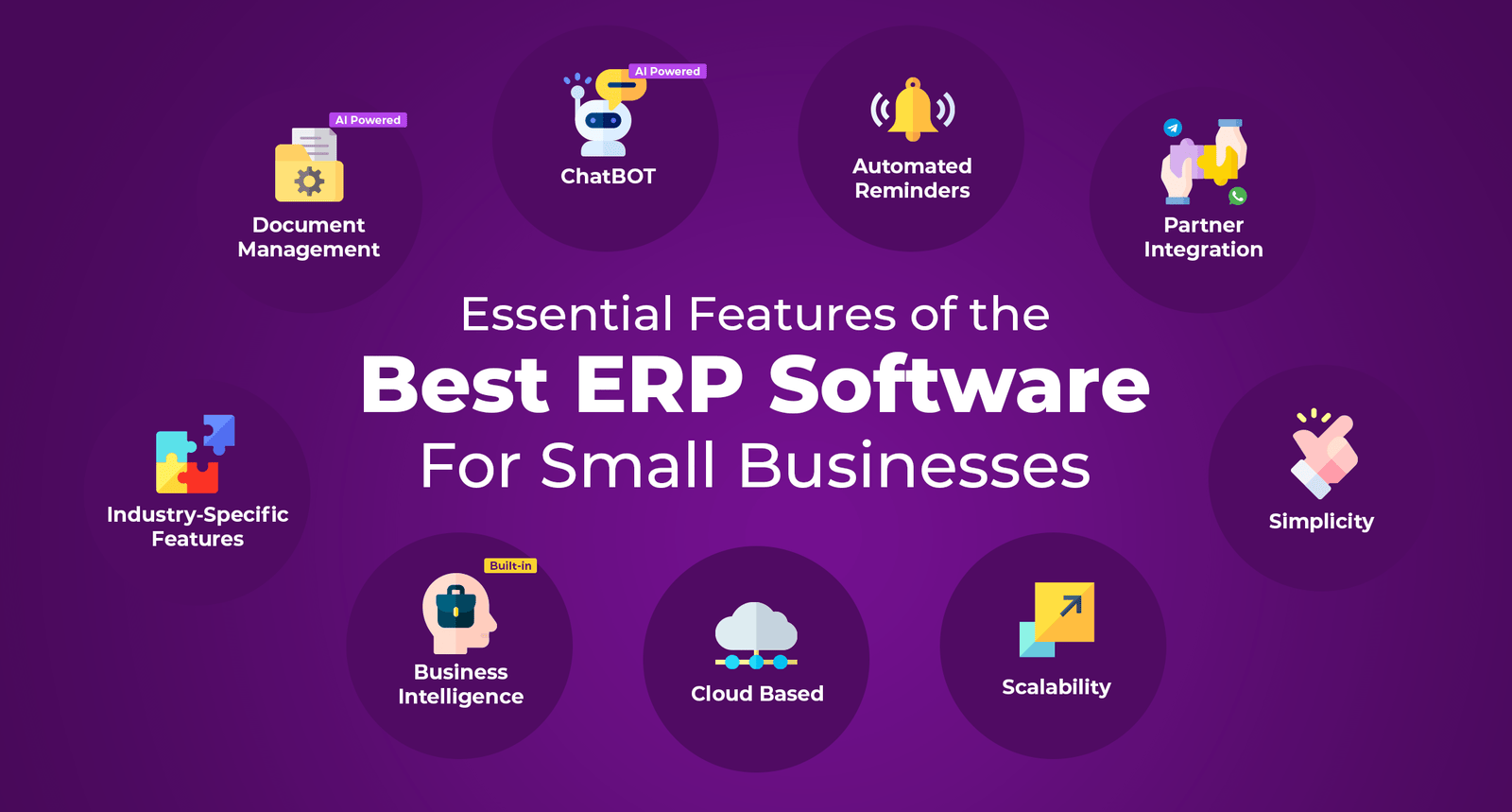
Key Features to Look for in Cloud ERP
Not every ERP system is the same. Small business owners should focus on features that support daily operations.
Accounting and Finance
Financial management is one of the most important ERP functions. It helps businesses:
- Track profits
- Manage taxes
- Create invoices
- Monitor expenses
Inventory Management
Businesses that sell products need inventory tracking to avoid shortages and overstocking.
Customer Relationship Management
CRM tools help companies manage customer communication and sales information.
Employee Management
Payroll and employee scheduling tools save time and improve organization.
Reporting and Analytics
Business reports help owners make smarter decisions using real-time data.
Top 10 Cloud ERP Companies
Many businesses search for the Top 10 cloud ERP companies before choosing software. Here are some popular providers in the USA market.
| Company | Best For |
|---|---|
| Oracle NetSuite | Growing businesses |
| SAP Business One | Manufacturing |
| Microsoft Dynamics 365 | Medium-sized businesses |
| Acumatica | Flexible cloud ERP |
| Sage Intacct | Financial management |
| Odoo | Affordable ERP solutions |
| Epicor | Manufacturing businesses |
| Infor CloudSuite | Industry-specific solutions |
| ERPNext | Small companies |
| Zoho ERP Tools | Startups and online businesses |
Every company offers different pricing, features, and support options.
Cost of Cloud ERP for Small Businesses
The price of Cloud ERP for small business depends on several factors.
Factors That Affect Pricing
- Number of users
- Business size
- Features required
- Customization needs
- Industry type
Small businesses may pay anywhere from $50 to several hundred dollars monthly depending on the provider.
Common Pricing Models
| Pricing Type | Description |
|---|---|
| Monthly Subscription | Pay monthly fees |
| Per User Pricing | Cost based on users |
| Feature-Based Pricing | Pay for selected modules |
Businesses should compare pricing carefully before making a decision.

ERP Software Download Options
Some companies search for ERP software download solutions because they prefer installed software instead of cloud systems.
Downloaded ERP software is installed directly on business computers or private servers.
Differences Between Cloud and Download ERP
| Cloud ERP | Download ERP |
|---|---|
| Online access | Installed locally |
| Monthly subscription | One-time setup cost |
| Automatic updates | Manual updates |
| Easier remote work | Limited remote access |
| Lower hardware needs | Requires servers |
Today, most small businesses prefer cloud ERP because it is easier to maintain.
Common Challenges Small Businesses Face
Although ERP systems provide many benefits, businesses may still face some challenges during setup.
Employee Training
Employees may need time to learn the new system.
Data Migration
Moving old business records into a new ERP system can take time.
Choosing the Wrong Software
Some companies buy systems with features they never use.
Budget Planning
Businesses should plan carefully before investing in ERP software.
Tips for Choosing the Right ERP Solution
Choosing the right system is very important for long-term business success.
Understand Your Business Needs
Make a list of the problems you want the software to solve.
Compare Multiple Providers
Always compare features, customer reviews, and pricing.
Check Customer Support
Reliable support helps businesses solve technical issues faster.
Start With Essential Features
Avoid paying for unnecessary tools in the beginning.
Test the Software
Many ERP companies offer free demos or trial versions.
Industries That Benefit From Cloud ERP
Many industries in the USA use ERP systems daily.
Retail Businesses
ERP helps retailers track inventory and customer orders.
Manufacturing Companies
Manufacturers use ERP to manage production and supply chains.
Healthcare Businesses
ERP systems improve patient records and billing management.
Construction Companies
Construction businesses use ERP for budgeting and project tracking.
E-commerce Stores
Online businesses use ERP to manage orders, shipping, and inventory.
Security in Cloud ERP Systems
Security is very important when storing business data online.
Modern ERP providers use:
- Data encryption
- Secure backups
- User access controls
- Multi-factor authentication
Businesses should still create strong passwords and train employees about cybersecurity safety.
Future of Cloud ERP for Small Businesses
Technology continues improving every year. Future ERP systems may include:
- Artificial intelligence tools
- Better automation
- Voice commands
- Advanced reporting
- Faster integrations
Small businesses using ERP today may become more competitive in the future market.
FAQ Section
What is Cloud ERP for small business?
Cloud ERP for small business is online software that helps companies manage accounting, inventory, payroll, customer data, and other operations in one system.
Is cloud ERP affordable for small businesses?
Yes. Many ERP providers offer affordable monthly plans designed for small business budgets.
Can employees use cloud ERP remotely?
Yes. Employees can access cloud ERP systems from anywhere using internet-connected devices.
How do I define ERP software simply?
To define ERP software, it is a system that combines multiple business functions into one connected platform.
What is the difference between cloud ERP and downloaded ERP software?
Cloud ERP works online, while downloaded ERP software is installed directly on local computers or servers.
Which industries use ERP systems the most?
Retail, manufacturing, healthcare, construction, and e-commerce businesses commonly use ERP systems.
Are cloud ERP systems secure?
Most modern cloud ERP providers use advanced security tools to protect business data.
Conclusion
Small businesses in the USA face many daily challenges, especially when managing operations manually. As companies grow, handling accounting, inventory, customer records, payroll, and reporting separately becomes difficult and time-consuming. This is why Cloud ERP for small business has become an important solution for modern companies looking to improve productivity and organization.
Cloud ERP systems help businesses connect all departments into one easy-to-manage platform. They reduce manual work, improve communication, and provide real-time business information that supports better decisions. Small businesses also benefit from remote access, lower setup costs, and easier system updates compared to traditional software.
Before choosing an ERP solution, business owners should carefully compare features, pricing, customer support, and long-term business needs. The right ERP system can support growth, improve efficiency, and create a stronger foundation for future success. Investing in a reliable cloud ERP solution today can help businesses stay competitive and prepared for tomorrow’s business challenges.