
LINE Of Credit Business Loans
LINE Of Credit Business Loans : Running a small business in the United States often requires steady cash flow. Business owners must manage inventory, employee salaries, equipment costs, rent, and many daily expenses. Sometimes businesses need extra funding to cover short-term financial needs or support future growth. This is where Business Loans can become very useful.
Many business owners prefer a business line of credit because it offers flexible funding. Instead of receiving one large loan amount at once, businesses can borrow money when needed and repay it over time.
A business line of credit works differently from a traditional business loan. With a normal loan, a business receives the full amount upfront. But with a line of credit, business owners can access funds multiple times up to a set credit limit.
This guide explains how Small Business LINE Of Credit funding works, the benefits, common requirements, interest costs, and how businesses can choose the right lender.
What Are LINE Of Credit Business Loans?
A business line of credit is a flexible funding option that allows businesses to borrow money as needed. Lenders approve a maximum limit, and the business can withdraw smaller amounts whenever necessary.
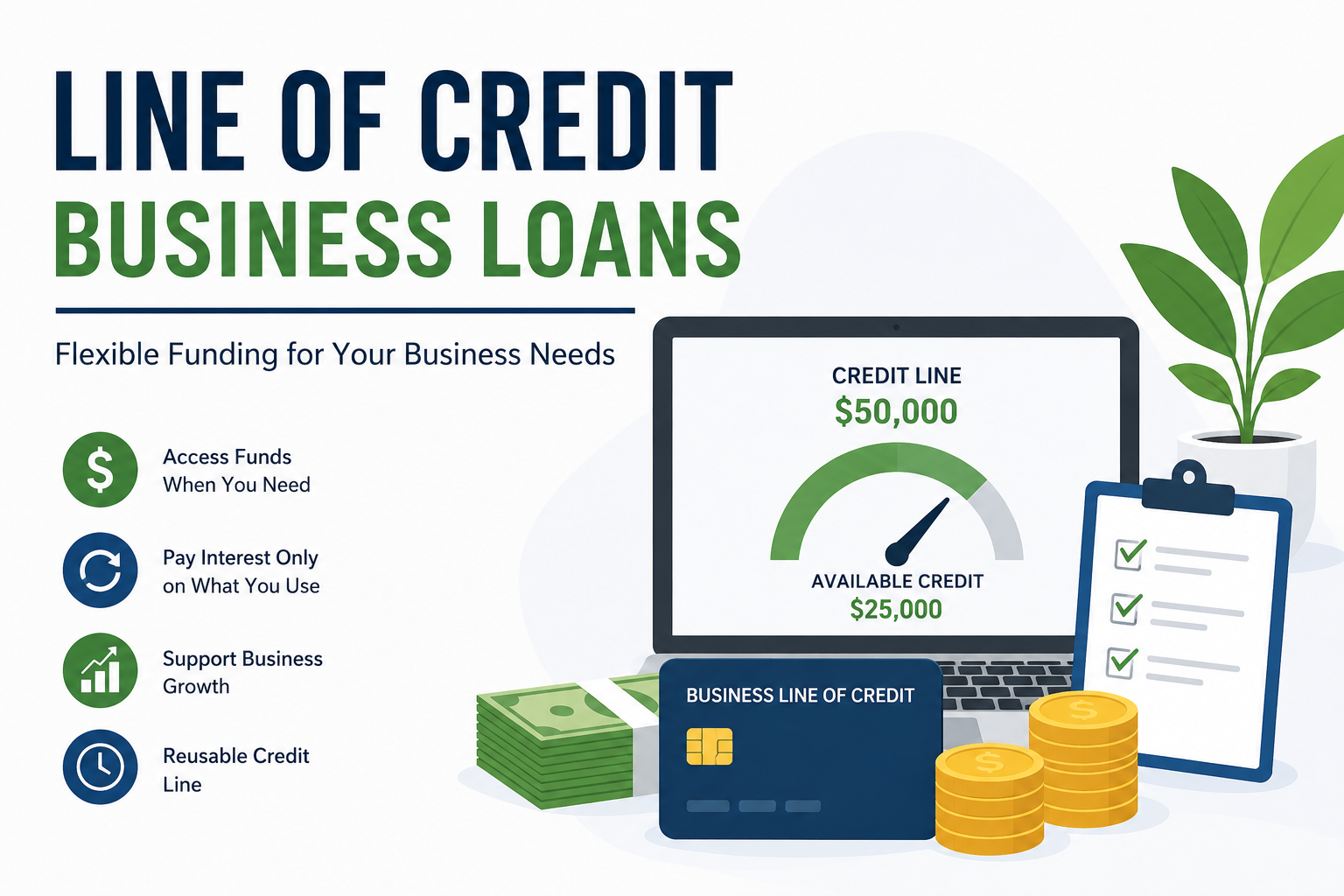
For example, if a business receives a $50,000 line of credit, the owner does not need to use the entire amount immediately. The business may only borrow $10,000 for inventory purchases and later use additional funds if required.
This flexibility makes line of credit loans popular among small businesses.
How a Business Line of Credit Works
The process is simple compared to many traditional business loans.
Basic Steps
- The business applies for a credit line
- The lender approves a borrowing limit
- The business withdraws funds when needed
- Interest is charged only on the used amount
- Repayment restores available credit
This system works similarly to a credit card but usually with larger borrowing limits.
Why small Business Use LINE Of Credit Business Loans
Small businesses face many unexpected expenses. A line of credit provides quick access to funds without applying for a new loan every time.
Common Reasons Businesses Use Credit Lines
| Business Need | Example |
|---|---|
| Inventory Purchases | Buying seasonal products |
| Emergency Expenses | Equipment repair costs |
| Payroll Support | Covering employee salaries |
| Cash Flow Management | Managing slow sales periods |
| Business Growth | Marketing or expansion projects |
This flexibility is one of the biggest reasons many companies search for the Best LINE Of Credit For Small Business funding.
Benefits of LINE Of Credit Business Loans
A business line of credit provides several advantages for business owners.
Flexible Borrowing
Businesses only borrow what they need instead of taking a large loan amount.
Lower Interest Costs
Interest applies only to the borrowed portion, not the full approved limit.
Reusable Funding
As businesses repay borrowed amounts, funds become available again.
Faster Access to Cash
Many lenders provide faster approvals compared to traditional bank loans.
Supports Business Growth
Credit lines help businesses manage expansion plans and operational expenses.
Secured vs Unsecured Business Lines of Credit
There are two main types of business credit lines.
Secured Credit Line
A secured line of credit requires collateral such as equipment, inventory, or property.
Unsecured Credit Line
An unsecured line of credit does not require collateral, but lenders may require stronger credit scores.
Comparison Table
| Feature | Secured Credit Line | Unsecured Credit Line |
| Collateral Needed | Yes | No |
| Approval Difficulty | Easier | Harder |
| Interest Rates | Lower | Higher |
| Risk to Business | Higher | Lower |
| Credit Score Importance | Moderate | High |
Business owners should carefully compare both options before choosing a lender.
Also Check – Best Payroll Software for Small Business
Best LINE Of Credit Business Loans
Different lenders offer different business line of credit programs. Some focus on startups, while others prefer established businesses.
Popular Lenders in the USA
| Lender Type | Best For |
| Traditional Banks | Established businesses |
| Online Lenders | Fast approval |
| Credit Unions | Lower fees |
| SBA Programs | Government-backed support |
The best option depends on business size, revenue, and financial history.
LINE Of Credit Business Loans
Business LINE Of Credit Requirements
Before approving a business line of credit, lenders review several factors.
Common Requirements
- Business operating history
- Monthly revenue
- Personal credit score
- Business bank statements
- Tax records
- Legal business registration
Some lenders have stricter requirements than others.
Business Revenue Requirements
Many lenders want proof that the business earns consistent income.
Typical Revenue Expectations
| Lender Type | Typical Revenue Requirement |
| Online Lenders | Lower revenue accepted |
| Traditional Banks | Higher revenue preferred |
| SBA Programs | Depends on business type |
Stable cash flow improves approval chances for most businesses.
Credit Score Requirements
Credit scores play an important role in business financing decisions.
General Credit Score Ranges
| Credit Score | Approval Chance |
| 750+ | Excellent |
| 700-749 | Good |
| 650-699 | Fair |
| Below 650 | More difficult |
Some online lenders may approve lower credit scores, but interest rates could be higher.
Interest Rates on Business Lines of Credit
Interest rates vary based on:
- Credit history
- Business revenue
- Loan amount
- Lender policies
- Economic conditions
Businesses with strong financial records usually receive lower rates.
Fixed vs Variable Interest Rates
Fixed Rates
The interest rate remains the same throughout repayment.
Variable Rates
The interest rate may change over time based on market conditions.
Business owners should understand rate structures before signing agreements.

How to Apply for a Small Business LINE Of Credit
Applying for a business line of credit is often easier today because many lenders provide online applications.
Application Steps
- Compare lenders
- Check eligibility requirements
- Gather financial documents
- Submit application
- Wait for lender review
- Receive approval decision
Some online lenders provide funding within a few business days.
Documents Usually Required
Businesses may need:
- Tax returns
- Bank statements
- Business licenses
- Profit and loss statements
- Personal identification
Keeping financial records organized can speed up approvals.
Advantages of Online Business Lenders
Online lenders have become popular for business funding.
Benefits of Online Lenders
- Faster approval times
- Simple applications
- Flexible requirements
- Quick funding access
However, business owners should compare fees carefully before accepting offers.
Risks of LINE Of Credit Business Loans
Although business lines of credit offer flexibility, there are still risks.
Common Risks
| Risk | Explanation |
| Overspending | Easy borrowing may increase debt |
| Variable Rates | Interest costs may rise |
| Late Payment Fees | Missed payments can be costly |
| Credit Score Damage | Missed payments affect credit |
Businesses should borrow responsibly and manage repayments carefully.
How Businesses Use Credit Lines Successfully
Many successful small businesses use lines of credit wisely to support operations.
Smart Uses
- Managing seasonal cash flow
- Purchasing inventory
- Handling emergency repairs
- Paying suppliers on time
- Supporting short-term growth
Responsible borrowing helps businesses maintain healthy finances.
Tips for Choosing the Right Lender
Not every lender is the same. Business owners should compare multiple offers.
Important Factors
| Factor | Why It Matters |
| Interest Rates | Affects total repayment |
| Fees | Some lenders charge extra costs |
| Repayment Terms | Flexible terms are helpful |
| Customer Service | Important during problems |
| Funding Speed | Useful for urgent needs |
Reading loan agreements carefully is always important.
Can Startups Get Business Lines of Credit?
Some startups may qualify for smaller business credit lines, especially if owners have strong personal credit.
However, startups may face:
- Lower credit limits
- Higher interest rates
- More approval requirements
Established businesses often receive better financing terms.
Future of Business Financing
Digital lending continues growing in the United States. Many lenders now use faster technology for approvals and funding.
Future trends may include:
- Faster loan approvals
- Improved online applications
- Better mobile banking tools
- More flexible funding options
Business owners now have more financing choices than ever before.
FAQs About LINE Of Credit Business Loans
What are LINE Of Credit Business Loans?
LINE Of Credit Business Loans are flexible funding options that allow businesses to borrow money when needed up to an approved credit limit.
What is the Best LINE Of Credit For Small Business?
The best option depends on business size, credit score, revenue, and funding needs. Online lenders, banks, and SBA programs all offer different benefits.
What are common Business LINE Of Credit Requirements?
Most lenders review business revenue, operating history, tax documents, bank statements, and personal credit scores.
Can startups qualify for a Small Business LINE Of Credit?
Some startups may qualify, especially if owners have good personal credit and strong financial records.
How fast can businesses receive funding?
Some online lenders provide approvals and funding within a few business days.
Do businesses pay interest on the full credit limit?
No. Businesses usually pay interest only on the amount they borrow.
Is collateral required for business credit lines?
Some lenders require collateral for secured credit lines, while unsecured credit lines may not require it.
Conclusion
LINE Of Credit Business Loans can provide valuable financial flexibility for small businesses in the United States. These funding options allow businesses to borrow money when needed instead of taking a large loan upfront.
Many business owners choose a Small Business LINE Of Credit because it helps manage cash flow, emergency expenses, inventory purchases, and business growth opportunities. Flexible borrowing and reusable credit make these financing options attractive for many industries.
Before applying, businesses should carefully review Business LINE Of Credit Requirements, compare lenders, and understand interest rates and repayment terms. Choosing the Best LINE Of Credit For Small Business depends on the company’s financial situation, funding goals, and long-term plans.
Responsible borrowing and proper financial planning can help businesses use credit lines successfully while supporting future growth and stability.